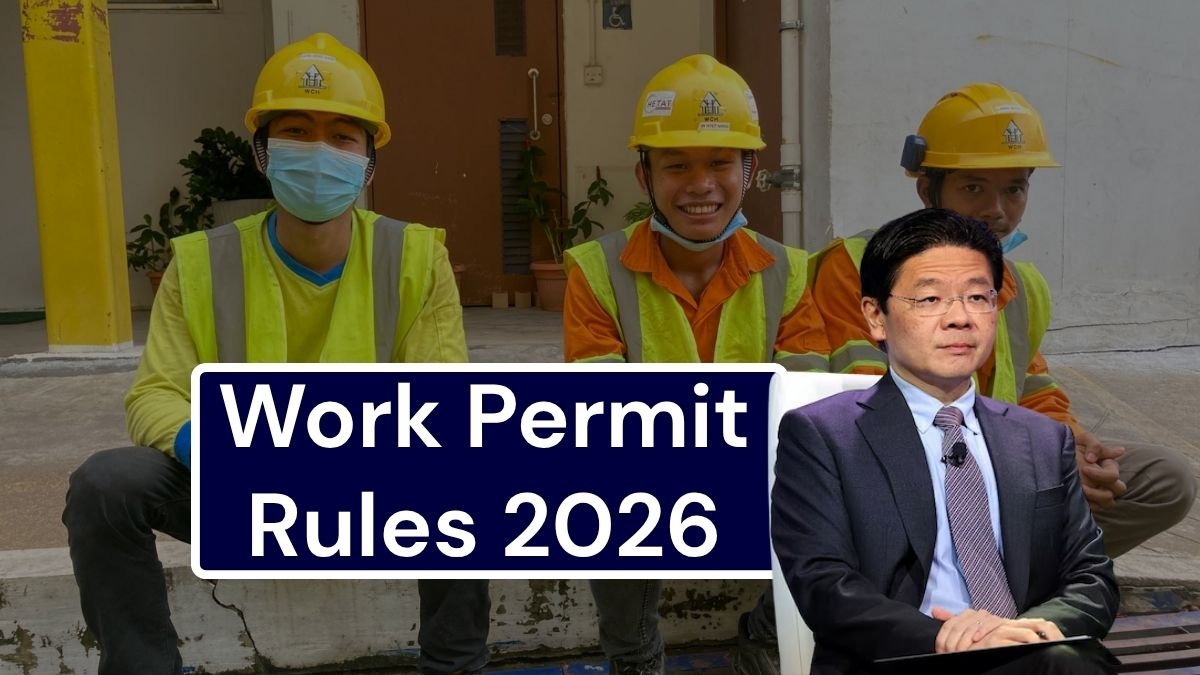
KEY HIGHLIGHTS
- Singapore will implement updated Work Permit rules in 2026, tightening hiring controls and raising quality standards for foreign workers.
- Key changes include revised levy rates, sector-specific quotas, and stricter eligibility requirements expected from 2026 onwards.
- Employers must review workforce planning early and ensure compliance with new MOM guidelines to avoid penalties or disruptions.
Singapore is updating its Work Permit framework in 2026 to better balance local employment and foreign workforce needs. Employers and workers should prepare early to avoid compliance risks.
Singapore Work Permit Rules 2026
| Category | Details |
|---|---|
| Implementation Year | 2026 |
| Policy Focus | Workforce quality, local hiring priority |
| Affected Sectors | Construction, Marine, Process, Services |
| Changes Expected | Levy adjustments, quota revisions, stricter criteria |
What Are the New Work Permit Changes in 2026?
The Ministry of Manpower (MOM) is expected to introduce stricter controls on Work Permit hiring. This includes tighter dependency ratio ceilings (DRC) and revised levies.
Employers may need to justify hiring foreign workers more clearly, especially in sectors with high reliance on Work Permit holders.
Stricter Eligibility and Hiring Criteria
From 2026, companies may face enhanced checks on worker qualifications and job roles. Lower-skilled hiring could be reduced gradually.
This aligns with Singapore’s long-term workforce strategy to increase productivity and prioritise local employment.
Higher Levies and Quota Adjustments
Levy rates are expected to increase in selected sectors. Firms heavily dependent on foreign manpower may see higher operating costs.
Quota limits may also be reduced, requiring businesses to rebalance hiring towards Singaporeans and Permanent Residents.
Impact on Employers and Businesses
Companies should start workforce planning now. Delays could result in manpower shortages or higher compliance costs.

Sectors like construction and services are likely to feel the strongest impact due to their reliance on foreign workers.
Why This Matters
These changes reflect Singapore’s broader economic policy to maintain sustainable workforce growth while protecting local job opportunities.
For employers, early preparation is critical. Adjusting hiring strategies now can reduce future cost pressures and ensure smoother transitions.
What Should You Do Next?
- Review your current foreign workforce ratio
- Plan for potential levy increases
- Invest in local workforce training
- Monitor MOM updates closely
[Link to Official Source – Apply Here]

FAQs
1. When will the new Work Permit rules start?
The updated rules are expected to take effect in 2026, with phased implementation possible.
2. Will levy costs increase?
Yes, certain sectors may see higher levies, especially those with higher dependency on foreign workers.
3. Which sectors are most affected?
Construction, marine, process, and services sectors are likely to face the biggest adjustments.
4. Do employers need to take action now?
Yes. Early workforce planning helps avoid disruption when rules are enforced.